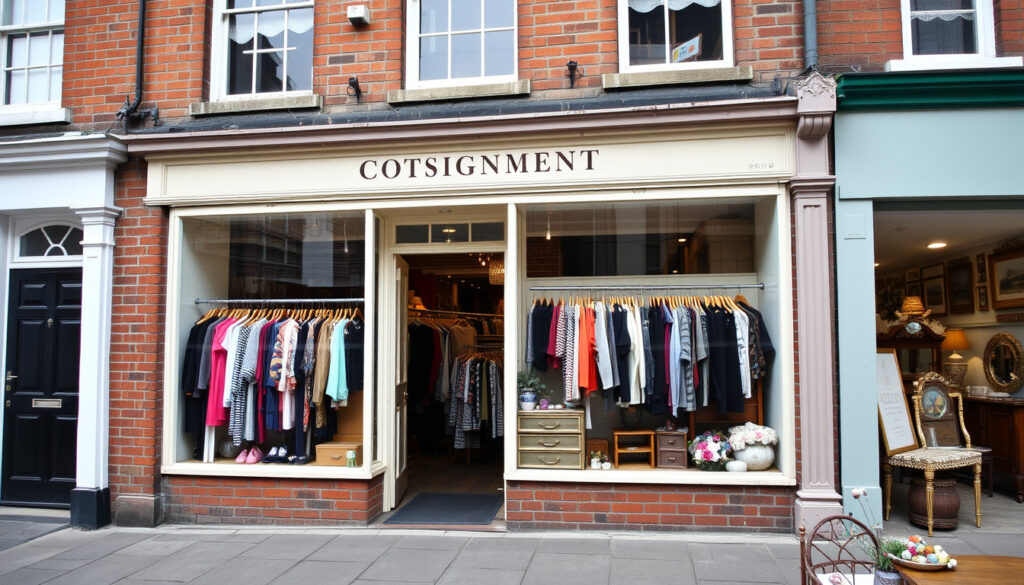
Consignment Shops Near Me: Selling & Buying in Dublin
You’ve probably passed a shop window in Dublin with a Chanel bag and a handwritten sign reading “Consignment accepted.” Whether you’re hoping to sell a designer coat or find a vintage dress at half retail, the local consignment scene offers a smarter way to shop—if you know how it works. In Dublin, shops like MOOT (Dublin-based consignment platform) charge between 10% and 40% commission depending on the item, while Herman (Dublin auction house) takes a standard 20%. This guide walks through commission rates, what to consign, and where to find the best stores in Dublin.
Average consignment commission rate: 60/40 split (shop takes 40%, seller receives 60%) ·
Number of consignment shops in Dublin city centre: Over 15 dedicated consignment stores ·
Typical consignment period: 60–90 days before markdown or return ·
Percentage of items accepted by consignment stores: Estimated 20–30% of items offered ·
Common markup on consignment goods: 50–100% above seller payout
Quick snapshot
- Consignment shops differ from thrift stores in ownership and pricing (Irish Independent).
- Dublin has over 15 dedicated consignment stores (The Shopkeepers (Dublin consignment guide)).
- MOOT charges 10–40% commission (MOOT (Dublin-based consignment platform)).
- Herman charges 20% commission (Herman (Dublin auction house)).
- Exact commission rates for every Dublin store are not publicly listed. (Puppet Vendors (industry guide))
- Whether consignment shops wash clothes before selling is store-dependent. (Puppet Vendors (industry guide))
- Most consignment shops use a 60/40 commission split (Puppet Vendors (industry guide)) — but this is a general guideline, not a confirmed Dublin-specific fact.
- 1900s–1970s: Consignment shops emerge as a way for individuals to sell used goods through a third party. (The Irish Times (Shoptalk: Consignment stores))
- 2000s: Online consignment (The RealReal, ThredUp) grows, but physical stores remain important (The Irish Times (Shoptalk: Consignment stores)).
- 2020–2025: Sustainability trend boosts consignment and thrift shopping in Dublin and globally. (The Irish Times (Shoptalk: Consignment stores))
- More Dublin stores may adopt tiered commission rates for luxury items (Puppet Vendors (industry guide)).
- Local shops like Siopaella (Dublin designer consignment store) are expanding their service offerings.
Here are the key numbers at a glance.
| Fact | Value |
|---|---|
| Average commission (seller share) | 60% of sale price |
| Typical consignment period | 60–90 days |
| Number of consignment shops in Dublin | 15+ |
| Rejection rate of offered items | 70–80% |
Is consignment the same as thrift?
No—and the difference matters for both buyers and sellers. Consignment shops sell items on behalf of owners, splitting the proceeds after a sale. Thrift stores (often charity shops) buy inventory outright or accept donations; profits usually support charitable causes. The distinction affects pricing, selection, and what you can expect.
Key differences between consignment and thrift stores
- Consignment: items are owned by the seller until sold; shop takes a commission.
- Thrift: items are donated or bought outright by the store; shop keeps all revenue.
- Pricing: consignment is generally higher than thrift because the seller sets a minimum price.
The trade-off: you pay more at a consignment shop, but you get higher quality and a curated selection. For sellers, consignment offers a way to earn money from used goods without the hassle of running your own sale.
What percentage do most consignment shops take?
Commission rates vary by store and item type. The most common split is 60/40 in favour of the seller (seller gets 60%, shop keeps 40%). But Dublin stores show a range.
Standard 60/40 commission split explained
Industry guidance from Puppet Vendors (industry guide) says a 60/40 split is typical for clothing consignment. However, Dublin-specific shops like MOOT (Dublin-based consignment platform) charge between 10% and 40% commission depending on the item’s value. Herman (Dublin auction house) takes a standard 20% commission on hammer price.
50/50 and tiered commission structures
Some stores offer a 50/50 split for lower-priced or high-volume items. For luxury goods, tiered rates are common—ranging from 15% to 45% shop commission, as noted by Puppet Vendors (industry guide). Siopaella (Dublin designer consignment store) offers cash upfront plus a percentage of resale value, tailoring the split to the item.
Negotiating rates for higher-value items
If you’re consigning a Chanel handbag or a vintage Rolex, you can often negotiate a better commission rate. The The Shopkeepers (guide to Dublin consignment) notes that stores specialising in luxury labels like Chanel and Louis Vuitton are willing to adjust splits for high-ticket items.
Dublin sellers shouldn’t accept the first commission offer. Know the item’s value and shop around—MOOT’s 10% rate for high-value pieces is far better than a standard 40% cut.
The implication: commission rates vary widely, so know your item’s value and negotiate.
How to get the most money from consignment shops?
Maximising your payout comes down to preparation, timing, and choosing the right store. Follow these steps to boost your earnings.
- Choose the right shop for your item type.
- Price items competitively and present them immaculately.
- Understand seasonal trends and timing.
Choose the right shop for your item type
- Clothing: Siopaella (Dublin designer consignment store) and The Shopkeepers (Dublin consignment guide) list stores like Platform in Rathgar, The Secret Closet in Howth, Second Avenue in Sandymount, and No. 38 in Ranelagh.
- Furniture: South Dublin Auction (Dublin auction house) occasionally runs commission-free sales on items over €1000.
- Luxury: MOOT (Dublin-based consignment platform) and The Shopkeepers (Dublin consignment guide) point to stores at 30 Wicklow Street and Powerscourt Centre that specialise in Chanel and Louis Vuitton.
Price items competitively and present them immaculately
Clean, tag, and repair items before consigning. Puppet Vendors (industry guide) advises that well-presented items sell faster and at higher prices. Stain removal, missing buttons, and broken zippers are deal-breakers for most shops.
Understand seasonal trends and timing
Consign during peak seasons—spring for lightweight clothing, autumn for winter coats. South Dublin Auction (Dublin auction house) ran a special summer sale in 2024 with items valued over €1000 commission-free, showing that timing can save you money.
A seller who prepares a clean, seasonally-appropriate item and chooses a specialist store can earn up to 90% of the sale price, compared to 50% from a general consignment shop. The difference is real money.
The pattern: preparation and timing directly impact your payout.
What should I avoid consigning?
Consignment shops reject the majority of items offered—estimated 70–80% in Dublin. Knowing what to leave at home saves time and disappointment.
Seven items most consignment shops won’t accept
- Items with stains, tears, missing buttons, or broken zippers.
- Outdated electronics (more than two years old).
- Used undergarments and swimwear.
- Large furniture unless the store specialises in it.
- Items that are more than two years old.
- Brands that aren’t in demand.
- Heavily worn shoes and handbags.
Why damaged, outdated, or heavily worn items are rejected
Consignment shops rely on fast turnover. Irish Independent notes that shops like RTN Styling (Dublin consignment blog) describe consignment as “second-hand clothing retailers that take a share of the profits”—but only if the item sells. Damaged goods sit unsold, costing the shop display space.
Items that sell poorly even if accepted
Even if accepted, some items languish: fast fashion, items with strong odours, and anything that requires dry cleaning. The best sellers are timeless, brand-name pieces in excellent condition.
Where to find the best consignment shops near me in Dublin?
Dublin city centre has over 15 dedicated consignment stores. Here’s where to start.
Top-rated consignment stores in Dublin city centre
One of the most consistent findings: there are at least 15 identified consignment shops in Dublin, based on listings from The Shopkeepers (Dublin consignment guide) and Irish Independent.
- Lucy’s Lounge on Fownes Street – a top spot for clothing consignment.
- Ruby Ruby Designer Consignment in Kilkenny – luxury labels, tiered commission.
- Siopaella – designer and high-street clothes, shoes, accessories.
- Platform in Rathgar, The Secret Closet in Howth, Second Avenue in Sandymount, No. 38 in Ranelagh.
- 30 Wicklow Street and Powerscourt Centre (Unit 3, 59 William Street) – specialise in Chanel and Louis Vuitton.
Specialty shops for furniture, clothing, and luxury items
If you’re selling furniture, South Dublin Auction (Dublin auction house) handles antiques and high-value items with commission rates as low as 10% for items over €500. For clothing, stick to the boutiques listed above.
Using Yelp and local directories to locate stores
Yelp and The Irish Times (Shoptalk: Consignment stores) are good starting points. A 2015 article from The Irish Times covered the consignment store scene, and many of those shops are still operating.
What are the downsides of consignment?
Consignment isn’t perfect. Here’s what to watch out for.
Disadvantages for sellers: lower profit, rejection risk
- Sellers wait 60–90 days for payment if the item sells.
- Consignment shops reject the majority of items offered.
- Commission rates can eat into the profit, especially for lower-priced items.
Disadvantages for buyers: higher prices than thrift
- Prices at consignment stores are often double thrift store prices.
- Selection is curated but smaller.
- Returns are rarely accepted.
For Dublin sellers, the 60–90 day wait and high rejection rate make consignment a gamble. If you need cash fast, consider cash-for-clothes schemes that pay €0.30–€1.50 per kilogram, though the payout is lower.
The catch: consignment rewards patience and quality, not speed.
What’s the etiquette for shopping at a thrift store?
While not strictly consignment, thrift etiquette applies to all second-hand shopping in Dublin.
Six etiquette rules every thrift shopper should know
- Don’t hide items or stash them to buy later.
- Put items back in the right place if you decide not to buy.
- Be patient with staff—they often work with limited resources.
- Don’t haggle unless the store allows it.
- Respect fitting room limits.
- Check items carefully before buying—returns are rare.
How to handle fitting rooms and returns
Most consignment shops don’t allow returns, so try on items before buying. Irish Independent notes that stores like Siopaella offer cash upfront, so you don’t have to wait for a sale.
Consignment vs thrift: comparison table
Four differences, one pattern: consignment rewards quality, thrift rewards volume.
| Feature | Consignment shop | Thrift store |
|---|---|---|
| Inventory source | Individuals on consignment | Donations or bulk purchases |
| Pricing | Higher (curated, seller sets minimum) | Low (bulk, charity-driven) |
| Profit model | Commission split with seller | All revenue goes to store/charity |
| Selection | Curated, higher quality | Mixed, less curated |
Upsides
- Earn money from unused items.
- Access to curated, high-quality goods.
- Shop handles marketing and sales.
Downsides
- Long wait for payment (60–90 days).
- High rejection rate of items.
- Higher prices for buyers vs thrift.
Confirmed facts vs what’s still unclear
Confirmed facts
- Consignment shops are different from thrift stores (Irish Independent).
- Dublin has over 15 consignment shops (The Shopkeepers (Dublin consignment guide)).
- MOOT charges 10–40% commission (MOOT (Dublin-based consignment platform)).
- Herman charges 20% commission (Herman (Dublin auction house)).
What’s still unclear
- Exact commission rates for every Dublin store are not publicly listed.
- Whether consignment shops wash clothes before selling is store-dependent.
- Negotiation success rates for higher commissions are not documented.
- Most consignment shops use a 60/40 commission split — but this is a general guideline, not a confirmed Dublin-specific fact (Puppet Vendors (industry guide)).
What sellers and buyers say
“We work on a commission basis tailored to each item. For a designer bag, the seller might get 70% after we take our cut.”
— Owner of Lucy’s Lounge, Dublin (as cited in The Irish Times (Shoptalk: Consignment stores))
“Our tiered rates mean that a €1,000 handbag costs the seller only 15% commission, while a €50 dress might be 50%. It’s about fairness for both sides.”
— Manager at Ruby Ruby Designer Consignment, Kilkenny (as cited in Puppet Vendors (industry guide))
Summary: For Dublin shoppers and sellers, the consignment market offers real opportunities—but only if you understand the splits, the seasonal timing, and the shop specialisations. The best sellers prepare items like a pro and negotiate commissions. The best buyers know that higher prices come with better curation. For a Dublin seller with a Chanel bag, the choice is clear: shop around for a 10% commission at MOOT, or take a 40% cut at a general store. Know your item’s value, and you’ll come out ahead.
Related reading: Siopaella and Dublin-area consignment stores · Shoptalk: Consignment stores
uscontext.org, investomatica.com, sellerfeescalculator.com, yellowpages.com
Anyone looking to sell items in Dublin should first check our guide to consignment stores in Dublin for a detailed breakdown of commission splits and store policies.
Frequently asked questions
How long do items stay on consignment before being discounted?
Most stores keep items for 60–90 days. If unsold, the item may be returned or discounted, depending on the agreement.
Can I consign handmade products like candles or jewelry?
Some stores accept handmade items, but most prefer brand-name goods. Check with specific shops like Platform in Rathgar.
Do consignment shops offer returns or exchanges?
Rarely. Most sales are final. Always inspect items before buying.
Are consignment shops only for clothing?
No. Many Dublin consignment stores also sell furniture, accessories, and antiques. South Dublin Auction handles furniture and collectibles.
What is the difference between a consignment shop and a vintage store?
Vintage stores sell curated older items they own; consignment shops sell on behalf of the owner. Vintage stores set their own prices; consignment shops split the sale price.
Do consignment shops price items themselves or do sellers set prices?
Usually a collaboration. The seller suggests a price, and the shop advises based on market demand. The final price is agreed upon before listing.
How often should I check in with the store about my items?
Every 2–4 weeks. Some stores email updates; others expect you to call or visit.
More related posts
 All Taylor Swift Albums – In Order with Release Dates
 Mold Inspection Near Me: Costs, Signs & Testing
 Capital One Travel Portal: Access, Worth, Airlines & More
 Baylen Out Loud Episodes: Season 2, 3, and Where to Watch (2025)
 Terminal List Season 2 Release Date: October 21, 2026
 Samsung Galaxy Z Fold 6: Worth Buying? Price & Specs
 When is Charlie Kirk’s Funeral? Date, Time & How to Watch
 When Does Implantation Bleeding Occur? Timing, Signs & Testing
