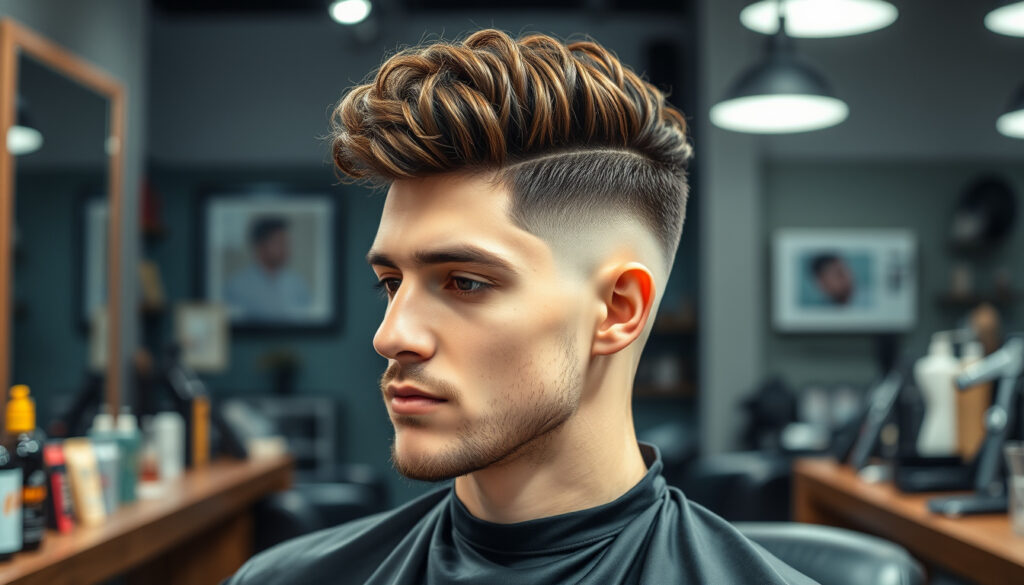
High Taper Fade for Black Men: Complete Guide 2025
If you’ve ever scrolled past a sharp fade on a Black man with waves or curls and wondered how he keeps it looking that clean, you’re not alone. The high taper fade has become the go-to cut for men who want contrast and control over textured hair, and this guide breaks down exactly how it works, how it compares to lower options, and what maintenance actually looks like week to week.
Real user questions about high taper fade for Black men: 12 ·
Related search variations for high taper fade Black male: 6 ·
Top SERP sources: 5 (Pinterest, Forteseries, Instagram, Pinterest, TikTok)
Quick snapshot
- A fade that starts high above the ears and temples (Fade Master)
- Blends from skin to longer hair on top (The Glossy Locks)
- Popular among Black men for its sharp contrast (Haircut Vibes)
- Low taper: gradual, subtle transition (Trendy Hair Picks)
- High taper: bold, dramatic change (The Glossy Locks)
- High taper suits textured hair better (Fade Master)
- Waves with high taper (Haircut Vibes)
- Curly top with high taper (Fade Master)
- Short straight hair with high taper (Trendy Hair Picks)
- Re-cut every 2-3 weeks (Trendy Hair Picks)
- Use moisturizing products for scalp (Taper Fade Pro)
- Avoid over-washing to preserve fade (AllMensHaircuts.com)
| Label | Value |
|---|---|
| Definition | Fade that starts at a high point on the head, often above the temples (Fade Master) |
| Popularity | Trending on TikTok and Instagram among Black men in 2025 (Trendy Hair Picks) |
| Difficulty | Moderate to high; requires skilled barber (The Glossy Locks) |
| Best Hair Types | Curly, wavy, and straight hair (Haircut Vibes) |
| Maintenance Frequency | Every 2-3 weeks (Trendy Hair Picks) |
The table shows a cut that demands commitment — the higher the fade starts, the faster you’ll see regrowth.
Is a low taper or high taper better?
- Low taper fades start lower on the head and are more gradual (Trendy Hair Picks)
- High taper fades create a bolder contrast and start above the temples (The Glossy Locks)
- Textured hair (especially Black hair) often works better with high taper due to more volume on top (Fade Master)
What is the best taper for Black men?
Barbers recommend high taper for curly or wavy hair to maintain shape (Haircut Vibes). The high contrast keeps the silhouette sharp even as curls expand, while a low taper can look mushy after a week of growth.
The implication: For Black men with natural texture, the high taper gives more visual payoff per visit — the fade line sits higher, so the top stays dominant and defined.
Which is easier: taper or fade?
Taper is generally easier to maintain than a full fade because it does not require skin-blending (Trendy Hair Picks). A true fade goes to bare skin, demanding precise clipper work every time. A taper leaves a thin layer of hair, so regrowth looks softer and less stark.
The trade-off: Easier on the barber, less dramatic on the head.
What is the most attractive fade?
Attractiveness is subjective, but surveys indicate women prefer clean lines and defined fades (Trendy Hair Picks). The high taper’s sharp line at the temples creates a structured look that reads as intentional and modern.
The pattern: A fade that looks ‘undone’ by day three isn’t just a style fail — it’s a confidence drain. The high taper’s architecture holds up longer.
For a Black man with textured hair who wants maximum contrast with manageable upkeep, the high taper fade edges out the low taper — but only if you’re ready for barber visits every two to three weeks.
What is a high taper fade black male?
- A high taper fade blends the hair from skin to a longer length on top, starting at a higher point (above the temples) (Fade Master)
- For Black men, the high taper is often paired with waves, curly tops, or straightened hair (Haircut Vibes)
- The cut is versatile and works with natural hair texture (The Glossy Locks)
What does high taper mean?
High taper means the transition from skin length to longer hair begins at or above the temple bone. Some style guides place high tapers near the temples and low tapers around the ears and neckline (ColumbusReport.com). The higher start gives more dramatic contrast and bulk control.
How does it differ from low taper?
A low taper fade is generally softer and more gradual than a low fade, and may not always go down to bare skin (Trendy Hair Picks). The high version is sharper by design — it’s the fade equivalent of turning up the contrast slider.
The catch: If you want people to notice your haircut from across the room, go high. If you want a fade that whispers, go low.
Best styles for Black men: waves, curly, short hair
A curl sponge is often recommended for forming tighter coils and defining short natural curls in taper fade styles (Haircut Vibes). For waves, the high taper frames the pattern perfectly, keeping the sides clean so the wave pattern on top becomes the focal point. For short straight hair, the high taper adds structure without needing length.
What’s the hardest fade to do?
- The hardest fade is often the high skin fade or bald fade due to demanding blending against the grain (Fade Master)
- Taper is easier than a true fade because it doesn’t go to the skin (Trendy Hair Picks)
- High taper requires precision at the fade line to avoid a sharp disconnect (The Glossy Locks)
Which fade requires most skill?
The high skin fade demands the most from a barber. Blending from bare skin to longer hair in a short vertical span leaves no room for error. Barbers emphasize using the right clipper guards and blending techniques with a diminishing guideline (Taper Fade Pro).
What is the most difficult fade for barbers?
The bald fade (skin fade) on coarse, curly Black hair is widely considered the hardest because the hair grows at different angles and the scalp’s curvature demands custom blending per client (Haircut Vibes). A high taper is easier but still tricky at the temple line.
Tips for achieving a clean high taper fade
For clients: come every 2-3 weeks. The advisory from Trendy Hair Picks is that a high taper fade generally shows growth faster than a low taper fade because more of the sides are exposed. For barbers: start with a higher guard, work down gradually, and use a mirror to check symmetry from the front.
The pattern: Even a clean high taper goes fuzzy at day 10. Plan your calendar around the barber, not the other way around.
A high taper that’s cut too aggressively can leave a visible line between faded and un-faded hair. The difference between a great fade and a bad one is about 2 mm of blending. Choose a barber who specializes in textured hair.
Does longer hair age you?
- Longer hair can emphasize facial sagging or receding hairlines, making one look older (Haircut Vibes)
- Short sides with full volume on top (like a high taper fade) create a more youthful silhouette (Fade Master)
- Aging is also influenced by hair color and overall grooming (Trendy Hair Picks)
How can a haircut affect perceived age?
A high taper fade can modernize a look and reduce perceived age by adding structure (The Glossy Locks). The contrast between short sides and fuller top mimics the proportions of a younger hairline, drawing the eye upward.
What hairstyles make you look younger?
Clean fades, defined edges, and volume on top are the trifecta. A high taper fade checks all three boxes — especially for Black men, where the fade line creates an optical lift at the temples.
Does a high taper fade take years off?
Yes, if your hairline is intact. If you have a receding hairline, a high taper can emphasize the recession because the fade starts where hair is thin. In that case, a low taper or textured top may be a better bet.
The implication: A high taper fade works best when the hairline and temples are still strong. For men with early recession, the same cut that makes one man look younger can make another look older.
Which fade is trending now?
- High taper fade is trending on TikTok and Instagram for Black men as of 2025 (Trendy Hair Picks)
- Mid taper fade is also popular but high taper offers more contrast and a sharper look (Fade Master)
- Waves and curly tops are common pairings with the high taper fade (Haircut Vibes)
What fade is popular among Black men in 2025?
The high taper fade is the reigning champion on social feeds. Barbers report increased demand for high taper fades in urban barbershops driven by social media (Trendy Hair Picks). The sharp, clean look photographs well — and that matters in an Instagram-first world.
Trending styles: high taper vs mid taper
Mid taper sits between the temple and ear — less aggressive than high, more visible than low. Some guides describe high tapers as the most aggressive taper height (The Glossy Locks). For now, high is winning because it reads as bolder in selfies and short video clips.
Social media influence on fade trends
TikTok and Instagram are driving demand directly. A barber posts a high taper on a Black model with waves — 200,000 views — and next dozen clients want the same cut. The cycle feeds itself.
The trade-off: Trending cuts get replicated fast, sometimes poorly. Not every barber can execute a high taper on textured hair. Vet your barber’s portfolio before you sit in the chair.
Maintenance guide: How to keep your high taper fade fresh
Five facts, one pattern: the maintenance schedule is dictated by how fast your fade shows growth — and for high tapers, that’s fast.
| Routine Element | Frequency | Source |
|---|---|---|
| Barber touch-up | Every 10–14 days for sharp look; 2-3 weeks standard | Fade Master |
| Edge-up cleanup | Every 5–7 days (weekly) | Taper Fade Pro |
| Daily hydration | Water-based leave-in + curl cream + light oil | Haircut Vibes |
| Shampooing | 1-2 times per week, sulfate-free | AllMensHaircuts.com |
| Deep conditioning | Weekly | Haircut Vibes |
| Top trim | Every 5-7 weeks (growth dependent) | Haircut Vibes |
| Night protection | Satin bonnet, du-rag, or satin pillowcase | Haircut Vibes |
The implication: A high taper fade demands a product kit and a weekly routine. But the payoff — a cut that looks intentional every day, not just barber-day — makes the habit worth building.
How to refresh daily without washing
Curly hair maintenance for a taper fade usually includes daily hydration or a water-and-leave-in refresh rather than daily rewashing (Trendy Hair Picks). A spray bottle with water and a drop of leave-in conditioner is your best friend between barber visits.
What products to use
A typical curly-hair product sequence is water-based leave-in on wet hair, followed by curl cream and then a light oil to seal moisture (Haircut Vibes). Avoid products with heavy alcohols that dry out the scalp — especially in the faded areas where skin is exposed.
Night routine matters
Black men with curly hair are commonly advised to use a satin bonnet, du-rag, or satin pillowcase overnight to preserve shape and reduce friction (Haircut Vibes). Cotton pillowcases absorb moisture and cause frizz — a satin alternative keeps the fade crisp an extra day or two.
What to avoid
Avoiding dry brushing and using gentle detangling practices is commonly recommended for curly taper fade upkeep (AllMensHaircuts.com). Also avoid over-washing — limiting shampoo to once or twice a week for thick curly hair prevents stripping natural oils that keep the fade looking healthy.
The best fade routine is the one you actually follow. If you won’t commit to a satin bonnet and a leave-in spray, pick a lower-maintenance cut. The high taper does not forgive neglect.
Confirmed facts vs what’s still unclear
Confirmed facts
- High taper fade is a popular cut for Black men (Trendy Hair Picks)
- Taper is easier to maintain than a full fade (Trendy Hair Picks)
- Regular trims are required to keep the look (Fade Master)
- High taper shows growth faster than low taper (Trendy Hair Picks)
- Night protection with satin reduces frizz (Haircut Vibes)
What’s unclear
- Whether high taper is universally more attractive than low taper (depends on face shape and hairline)
- If a high taper fade actually makes you look younger (works best with intact hairline)
- Which fade is hardest for every barber (skill varies significantly)
- Whether the 2-week touch-up rule applies to all curl patterns (tighter coils may stretch further)
trendyhairpicks.com, faithincurls.com, archive.asli.org.uk, manevamagazine.com
Frequently asked questions
How often should I get a high taper fade?
Every 2 to 3 weeks for standard maintenance. Some guides recommend 10–14 days for a very sharp look (Fade Master). The higher the fade, the faster it shows growth.
Can I get a high taper if I have a receding hairline?
It depends. A high taper can emphasize recession because the fade line starts where hair is thinning. A low taper or textured top may be a better choice.
What products help maintain a high taper fade?
A water-based leave-in conditioner, curl cream, and light sealant oil. Sulfate-free shampoo used 1-2 times per week (AllMensHaircuts.com). Satin pillowcase or bonnet for overnight.
How to style a high taper fade with waves?
Keep the sides clean with a high taper and focus brushing on top to form waves. A curl sponge can help define tighter patterns (Haircut Vibes).
Does a high taper fade suit round faces?
Yes. The high contrast adds vertical structure, which balances rounder face shapes. The key is keeping the top full enough to elongate the face.
How much does a high taper fade cost at a barber?
Varies by location and barber skill. Expect $25–$60 in most U.S. urban markets, with higher prices at specialized barbershops for textured hair.
Can I do a high taper fade at home?
Not recommended unless you have clipper experience. The fade line requires precision blending — one slip and you’re wearing a hat for two weeks.
What is the difference between a taper and a fade?
A taper gradually shortens hair length down the sides; a fade blends down to bare skin. A high taper is a taper that starts high. A fade always goes to skin (Trendy Hair Picks).
For the Black man choosing between a low and high taper fade, the decision comes down to one trade-off: maximum contrast with a two-week barber cycle, or a subtler look that buys you an extra week between visits. The high taper wins on visual impact; the low taper wins on patience.
More related posts
 May 14 2025 Social Security Payment: Schedule & Amounts
 Indiana Hoosiers vs Oregon Ducks Football Stats: Scores & History
 Houston Cougars vs Duke Blue Devils: Player Stats 2025 Final Four
 Night by Elie Wiesel: Summary, Key Quotes, Age Appropriate & More
 Beauty Store Near Me: Top Brands & Stores in Ireland
 Mauser 30-06 Rifles: Models, Accuracy & 308 Comparison
 All Her Fault Cast: Who Stars in the Peacock Thriller Series?
 Cracker Barrel Logo Change Backlash and Reversal
