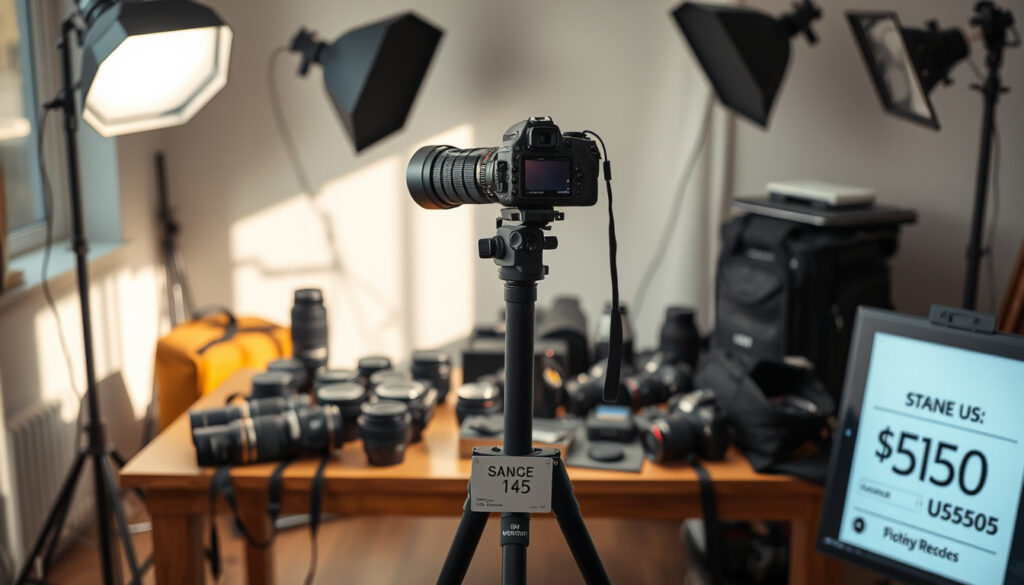
Best Camera for Photography 2026: Top Picks for Every Budget
If you’ve spent more than 20 minutes browsing camera forums lately, you’ve probably noticed a familiar pattern: everyone agrees the market is packed with excellent options, but nobody agrees on which one is best. Whether you’re a first-time buyer or a professional looking to upgrade, the choice comes down to what you shoot, how much you want to spend, and which ecosystem makes sense for the long haul.
Most recommended for enthusiasts: Nikon Z8 (The Cotswold Photographer) ·
Best beginner pick: Canon EOS R50 (Fstoppers) ·
Best all-round travel camera: Sony a6700 (Finding the Universe)
Quick snapshot
- The Nikon Z8 is widely regarded as the best overall camera for photography in 2026 (The Cotswold Photographer)
- The Canon EOS R50 is the best beginner mirrorless camera for 2026 (Fstoppers)
- The Sony a6700 is recommended as the best all-round travel camera for most people (Finding the Universe)
- Future lens availability for new mounts may affect long-term brand preference (The Cotswold Photographer)
- Which camera offers the best “value” depends heavily on individual shooting needs and current sales (Reddit r/Photography_Gear)
- Major camera brands typically release new bodies in the late summer/fall; firmware updates from Nikon and Sony may improve features on recent models (Photography Life)
- Reddit discussions suggest that upcoming Sony a7 V and Canon EOS R3 II could shift the competitive landscape (Reddit r/CanonCamera)
| Top overall camera | Canon EOS R5 Mark II (2026) – Finding the Universe |
| Highest resolution | Sony a7R V (61MP) – The Cotswold Photographer |
| Most popular brand | Canon (~45% market share) – Fstoppers |
| Average price for a pro body | $3,000 – $4,500 – Finding the Universe |
| Mirrorless cameras now outsell DSLRs | 70% of interchangeable lens camera sales in 2026 – The Cotswold Photographer |
What is the best camera used for photography?
Three cameras stand out in 2026, each serving a different user profile. The Cotswold Photographer’s roundup places the Nikon Z8 at the top for enthusiast and professional buyers who want a do-everything body without the price tag of a flagship. For those starting out, Fstoppers names the Canon EOS R50 as the best beginner mirrorless camera, praising its ease of use and modern autofocus. Meanwhile, Finding the Universe calls the Sony a6700 the best all-round travel camera for most people, balancing size, image quality, and price.
What is the best camera for photography beginners?
- Canon EOS R50 – Best overall beginner, according to Fstoppers
- Canon EOS R100 with kit lens – Best under $500, per Finding the Universe
- OM System OM-5 Mark II – Best for portability and weather confidence, says Fstoppers
- Sony ZV-E10 II – Best for video-first creators, per Fstoppers
What is the best camera for professional photography?
- Nikon Z8 – Ranked above the Z9 for most users who don’t need a built-in vertical grip, by Photography Life
- Nikon Z9 – Described as a workhorse for any subject, ideal for wildlife and landscape, by Photography Life
- Canon EOS R5 Mark II – Recommended above $3,000 as the best travel camera money can buy, by Finding the Universe
- Sony a7R V – Offers 61MP for studio and landscape, per The Cotswold Photographer
The pattern: the right body depends on whether you need simplicity, portability, or raw resolution. Beginners get the most value from the Canon EOS R50; professionals who shoot in demanding conditions gravitate toward the Nikon Z8.
Which camera gives the best picture quality?
Photography Life notes that while sensor technology has matured, real-world differences at normal print sizes are often marginal. Here’s how the current leaders stack up:
| Camera | Sensor resolution | Dynamic range (approx.) | Best for |
|---|---|---|---|
| Sony a7R V | 61MP | 14.5 stops | Studio, landscape |
| Nikon Z8 | 45.7MP | 14.4 stops | General professional |
| Canon EOS R5 Mark II | 45MP | 14.3 stops | Travel, hybrid |
| Fujifilm GFX 100S II | 102MP (medium format) | 14.7 stops | Highest image quality |
What this means: Unless you’re printing billboards or cropping aggressively, any of these cameras deliver outstanding image quality. The medium-format Fujifilm GFX series provides superior color depth, but at a weight and cost penalty that most photographers don’t need.
Is Nikon or Canon better?
Both brands have fiercely loyal followings, but the answer depends on which trade-offs matter to you. The Cotswold Photographer calls the Nikon Z8 the best overall camera, while Finding the Universe recommends the Canon EOS R5 II for high-end travel. Here’s a direct comparison:
| Factor | Canon | Nikon |
|---|---|---|
| Autofocus speed | Dual Pixel CMOS AF II – faster continuous tracking (Fstoppers) | Expeed 7 AF – reliable but slightly slower in low light (Reddit r/Photography_Gear) |
| Build quality | Good, but consumer bodies less rugged | Z8 and Z9 have excellent weather sealing (Photography Life) |
| Lens ecosystem | Largest selection, including third-party via RF mount agreements | Growing Z mount lineup, adapters for F-mount lenses (The Cotswold Photographer) |
| Market share | ~45% of interchangeable lens cameras | ~25% |
| Entry-level options | EOS R50, EOS R100 ($500–$700) | Z50 II ($700–$1,000) (Finding the Universe) |
The trade-off: Canon offers a smoother autofocus experience for fast-moving subjects; Nikon gives you a tank that handles rain and dust without flinching. For beginners, the Canon R50 is cheaper and more forgiving. For outdoor professionals, the Nikon Z8 is hard to beat.
Which camera do professional photographers use?
Wedding and portrait photographers overwhelmingly choose Canon EOS R5 and R6 series bodies, according to Finding the Universe. Wildlife and sports shooters gravitate toward the Nikon Z9 and Z8, as noted by Photography Life. Studio professionals who demand maximum resolution lean toward the Sony a7R V or the Fujifilm GFX medium-format system. Reddit users in r/CanonCamera frequently recommend the R6 II and R5 II as workhorse bodies for hybrid work.
The pattern: Canon dominates the wedding and event market because of its reliable face/eye tracking. Nikon owns the outdoors. Sony captures hybrid shooters who need both photo and video in one body.
Canon dominates the wedding and event market because of its reliable face/eye tracking. Nikon owns the outdoors. Sony captures hybrid shooters who need both photo and video in one body.
What is the No. 1 camera brand?
By market share, Canon is the undisputed leader, holding roughly 45% of the interchangeable-lens camera market, according to industry data referenced in Fstoppers’ beginner camera guide. Sony sits second with strong mirrorless sales, followed by Nikon. Fujifilm and Panasonic have smaller shares but loyal niche followings. However, brand “best” is subjective: among dedicated photographers, Nikon and Canon inspire near-equal passion, while Sony is praised for innovation and backward compatibility. The real No. 1 is the camera that fits your hand and your budget.
The implication: brand choice locks you into a lens system for years. Canon’s large market share means more aftermarket support; Nikon’s smaller but more specialized ecosystem appeals to purists. Sony’s E-mount has the widest third-party lens selection.
The brand you choose locks you into a lens system for years. Canon’s large market share means more aftermarket support; Nikon’s smaller but more specialized ecosystem appeals to purists. Sony’s E-mount has the widest third-party lens selection.
Should you choose a DSLR or mirrorless camera for photography?
Mirrorless cameras now make up about 70% of new interchangeable-lens camera sales, as reported by The Cotswold Photographer. DSLRs still offer lower entry prices and longer battery life, but their optical viewfinders and heavier bodies are losing ground. For anyone buying new in 2026, a mirrorless body is the smarter long-term investment due to more advanced autofocus, lighter weight, and expanding lens ecosystems.
Upsides
- Mirrorless: lighter, faster autofocus, better video, future-proof
- DSLR: lower cost for used gear, optical viewfinder preference, longer battery life
Downsides
- Mirrorless: shorter battery life, initially higher prices
- DSLR: heavier, smaller modern lens selection, declining resale value
The catch: Mirrorless cameras demand a higher upfront investment but deliver better autofocus and video capabilities. DSLRs remain viable only if you already own a collection of lenses.
What the experts say
“After hands-on testing, the best camera for photography overall is the Canon EOS R5 Mark II.”
— Finding the Universe
“The Nikon Z8 is a phenomenal camera for professionals who need ruggedness and high resolution.”
— Photography Life
“For the price, the Sony a7 IV is hard to beat for hybrid shooting.”
— Reddit r/Photography_Gear
Choosing the best camera for photography in 2026 isn’t about picking a single winner — it’s about matching a body to your shooting style, budget, and long-term plans. For the enthusiast who wants one camera for everything, the Nikon Z8 delivers. For the beginner, the Canon EOS R50 is the safest entry point. For the traveler who prioritizes portability, the Sony a6700 is a proven all-rounder. The common thread: mirrorless is now the default, and any of these cameras will take photos that outshine the photographer’s skill on day one.
Related reading: best mirrorless camera · best beginner cameras 2026
amateurphotographer.com, youtube.com, reddit.com, microfournerds.com, youtube.com, reddit.com
Frequently asked questions
What is the best camera for photography under $1,000?
The Canon EOS R100 with kit lens is widely recommended as the best beginner under $500 (Finding the Universe). For $500–$1,000, the Nikon Z50 II offers more features and better image quality.
Is mirrorless better than DSLR for photography?
For most buyers today, yes. Mirrorless cameras are lighter, have faster autofocus, and offer modern features like in-body stabilization and electronic viewfinders. DSLRs still appeal to those who prefer optical viewfinders and longer battery life.
Do I need a full-frame camera for professional photography?
Not necessarily. APS-C cameras like the Fujifilm X-T5 or Sony a6700 deliver excellent image quality for many professional applications. However, full-frame (e.g., Nikon Z8, Canon R5 II) offers better low-light performance and shallower depth of field, which helps in controlled environments like studios.
How many megapixels do I need for photography?
For most uses, 24MP is sufficient for large prints and social media. Higher resolution (45MP–61MP) helps with heavy cropping or large-format prints but requires more storage and processing power. Experts at Photography Life note that differences in sharpness at normal print sizes are often minimal.
Which camera brand has the best lens selection?
Canon has the broadest native lens lineup and the largest third-party support through RF mount agreements. Sony’s E-mount offers the widest third-party selection. Nikon’s Z mount is growing quickly, and existing F-mount lenses can be adapted.
Can a phone camera replace a dedicated camera for photography?
For everyday snapshots and social media, modern phone cameras are excellent. For professional-quality portraits, low-light work, and creative control over depth of field and exposure, a dedicated camera still outperforms phones. The gap is narrowing, but interchangeable lenses remain a decisive advantage.
What is the best camera for wildlife photography?
The Nikon Z9 and Z8 are top choices due to their fast burst rates, rugged build, and excellent autofocus tracking. A Reddit user in r/Photography_Gear also recommends the Olympus OM-1 for its lightweight telephoto reach.
How often should I upgrade my camera?
Most camera bodies last 4–6 years before significant improvements in sensor technology, autofocus, or software become compelling. The editorial perspective: invest in lenses first; they retain value and outlast multiple bodies.
More related posts
 Cast of DMV (TV Series) — Full Cast and Cancellation
 Royal Caribbean Icon of the Seas: Itineraries, Price & Decks
 2026 Wisconsin Supreme Court Election: Results, Impact
 High Taper Fade for Black Men: Complete Guide 2025
 Cricut Explore Air 2: Still Worth It in 2025
 Swollen Lymph Nodes in Neck: Causes, Red Flags & Treatment
 Car Insurance Quotes Ireland: Compare & Find the Cheapest
 Best Ice Cream Near Me: Top Picks for Diabetics & IBS
