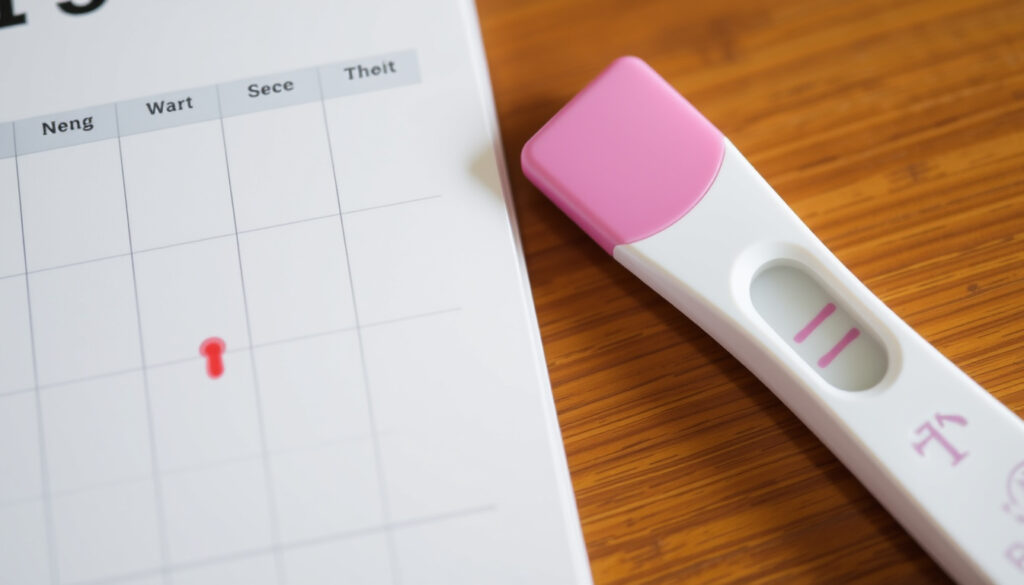
When Does Implantation Bleeding Occur? Timing, Signs & Testing
If you’re trying to conceive and notice light spotting a week before your expected period, your mind jumps to one question: could this be implantation bleeding? That tiny streak of pink or brown can feel like a clue, but it’s easy to confuse with an early period.
Timing: 10 to 14 days after ovulation ·
Duration: 1 to 2 days ·
Color: light pink to brown ·
Flow: light spotting, not enough to need a pad ·
Pregnancy test timing: positive about 2–3 days after implantation
Quick snapshot
- Occurs 10–14 days after ovulation (Cleveland Clinic (health system))
- 1–2 days duration (The Bump (parenting resource))
- Before expected period (Clearblue (consumer diagnostics brand))
- Light pink or brown (Mayo Clinic (medical research institution))
- Spotting or streaks (Mayo Clinic (medical research institution))
- No clots or heavy flow (Mayo Clinic (medical research institution))
- Positive 2–3 days after bleeding stops (Clearblue (consumer diagnostics brand))
- hCG rises after implantation (Clearblue (consumer diagnostics brand))
- False negative possible if tested too early (Ubie Health (medical information service))
- Mild cramping (Cleveland Clinic (health system))
- Breast tenderness (Mayo Clinic (medical research institution))
- Fatigue (Cleveland Clinic (health system))
Five key facts about implantation bleeding, drawn from medical guidelines:
| Fact | Value |
|---|---|
| Typical timing | 10–14 days after ovulation (Cleveland Clinic (health system)) |
| Average duration | 1–2 days (The Bump (parenting resource)) |
| Common color | Light pink to brown (Mayo Clinic (medical research institution)) |
| Flow intensity | Spotting or light streaks |
| Pregnancy test window | Positive approximately 2–3 days after bleeding (Clearblue (consumer diagnostics brand)) |
When does implantation bleeding occur?
Timing relative to ovulation and conception
Implantation bleeding typically happens 10 to 14 days after ovulation, according to Cleveland Clinic (health system). This timing places it right around the window when you’d expect your period, which is why so many people confuse the two. The bleeding occurs when a fertilized egg attaches to the uterine lining—an event that usually happens about 6 to 10 days after conception, as Flo Health (women’s health platform) describes.
In a typical 28-day cycle, ovulation happens around day 14. Implantation bleeding would then appear around cycle days 21 to 24—several days before a missed period. That gap matters: if you see spotting on day 21, it’s more likely implantation than menstruation.
How long does implantation bleeding last
Cleveland Clinic reports that implantation bleeding is short, lasting up to two days. Many women notice spotting that lasts just a few hours to one full day, The Bump notes. If bleeding continues longer, it’s more likely an early period or another cause.
The implication: implantation bleeding offers a narrow window—if you see spotting beyond 48 hours, it’s probably not implantation.
How do I know if it’s implantation bleeding?
Color and flow compared to menstrual period
Implantation bleeding typically appears as light pink or brown spotting, not the bright red you’d see with a period. Mayo Clinic (medical research institution) says it’s lighter than a menstrual period and usually stops on its own. The flow is spotting—streaks on toilet paper or a panty liner—not enough to fill a tampon or pad.
Compare the two:
| Feature | Implantation Bleeding | Menstrual Period |
|---|---|---|
| Color | Light pink to brown | Bright red to dark red |
| Flow | Spotting, streaks | Light to heavy, may include clots |
| Duration | 1–2 days | 3–7 days |
| Timing | 10–14 days after ovulation | 14 days after ovulation |
Five differences, one pattern: implantation bleeding is shorter, lighter, and browner than a period.
Other early pregnancy symptoms to watch for
Mild cramping can accompany implantation bleeding, Cleveland Clinic notes. Other early signs include breast tenderness and fatigue—but these are also common with a regular period.
No single symptom confirms implantation. About 1 in 4 pregnant women experience implantation bleeding, per Cleveland Clinic, meaning three out of four do not. Lack of spotting is not a sign that pregnancy failed.
The catch: symptoms alone can’t distinguish implantation from period. Timing and flow are the clearest clues.
Will I test positive during implantation bleeding?
hCG levels at implantation
Human chorionic gonadotropin (hCG)—the hormone pregnancy tests detect—begins to rise only after the embryo implants. During implantation bleeding itself, hCG levels may be too low to register on a home test. Ubie Health recommends waiting until after your missed period for the most reliable result.
When to take a pregnancy test
Most home pregnancy tests become positive about 2 to 3 days after implantation bleeding ends, once hCG has had time to build up. Testing earlier risks a false negative. Clearblue advises testing from the day of your missed period for 99% accuracy.
- If you see possible implantation bleeding, wait 2–3 days before testing.
- If the test is negative but your period hasn’t arrived, repeat in 48–72 hours.
- A positive test after spotting strongly suggests the spotting was indeed implantation bleeding.
Why this matters: rushing to test during implantation bleeding almost guarantees a negative. The wait—though frustrating—gives hCG time to reach detectable levels.
What are the 4 stages of implantation?
Implantation is a multi-step process. Here’s the sequence a blastocyst goes through to establish pregnancy:
- Stage 1: Apposition — The blastocyst approaches the uterine lining and loosely attaches.
- Stage 2: Adhesion — Cells on the blastocyst surface stick firmly to the endometrium.
- Stage 3: Invasion — Trophoblast cells begin to burrow into the uterine lining.
- Stage 4: Placental formation — The embryo establishes blood supply, and the placenta starts developing.
Four phases, one critical moment: bleeding can occur during invasion (stage 3), when trophoblast cells disrupt small blood vessels in the endometrium. That’s the source of the spotting.
The trade-off: the same process that causes bleeding is also essential for a healthy pregnancy. Light spotting during invasion is normal, not alarming.
What are signs of successful or failed implantation?
Symptoms indicating successful implantation
Mayo Clinic lists light spotting as one possible early sign of pregnancy. Other signals include mild cramping, breast tenderness, and fatigue. These arise from the hormonal shift that follows successful implantation.
Possible symptoms of failed implantation
Failed implantation may cause heavier bleeding that resembles a normal period, or no noticeable symptoms at all. Since many early miscarriages happen before a missed period, it’s often impossible to tell the difference without a blood test. The key distinction: a positive pregnancy test confirms implantation succeeded.
No single symptom—including spotting—can confirm successful implantation. The only definitive proof is a positive pregnancy test after your missed period. For those trying to conceive, the waiting period is the hardest part, but it’s also the most reliable.
Timeline from ovulation to positive test
This sequence shows the typical milestones:
- Day 1–5: Menstrual period (if not pregnant)
- Day 14 (approx): Ovulation
- Day 10–14 after ovulation: Implantation bleeding may occur
- 2–3 days after implantation: hCG levels rise enough for home pregnancy test
For someone tracking ovulation, implantation bleeding offers an early clue but not confirmation. The pattern: wait for the test.
Confirmed facts vs. what remains unclear
Confirmed facts
- Implantation bleeding occurs 10–14 days after ovulation (Cleveland Clinic)
- Bleeding is typically light and short (Clearblue)
- hCG begins to rise after implantation (Mayo Clinic)
- About 1 in 4 pregnant women experience implantation bleeding (Cleveland Clinic)
What’s unclear
- Exact number of days varies by individual cycle
- Not all pregnant women experience implantation bleeding — about 75% do not
- The cause of spotting is not always implantation — can be other factors
- The exact trigger for implantation bleeding in some women but not others is unknown
Expert perspectives
“The exact time varies, but most implantation bleeding occurs about 10 to 14 days after ovulation.”
Cleveland Clinic (health system)
“Implantation bleeding usually happens around one to two weeks after fertilisation, around the same time you’d expect your period.”
Clearblue (consumer diagnostics brand)
“Implantation bleeding usually occurs earlier than your expected period, around seven to 10 days after conception, and typically lasts just one to two days.”
The pattern across all three sources is consistent: implantation bleeding happens days before a missed period, lasts briefly, and is lighter than a period.
mayoclinic.org, mayoclinic.org, rattlestork.org, instagram.com, youtube.com
Frequently asked questions
Can implantation bleeding be heavy?
Typically no. Implantation bleeding is light spotting, not heavy flow. Heavy bleeding is more likely an early period or other medical issue. If you’re soaking through a pad, consult your doctor. (ACOG (professional ob-gyn organization))
Does implantation bleeding have clots?
Implantation bleeding does not usually contain clots. Clots suggest menstrual tissue or a heavier flow. If you pass clots, contact a healthcare provider. (NHS (UK health service))
Can you have implantation bleeding without knowing you’re pregnant?
Yes. Many women notice light spotting and dismiss it as a period, especially if they weren’t tracking their cycle closely. That’s one reason some people don’t realize they’re pregnant until later.
How soon after implantation can I test?
Most home pregnancy tests become positive about 2 to 3 days after implantation, once hCG levels are detectable. Testing before implantation ends usually yields a false negative.
Is implantation bleeding always a sign of pregnancy?
Spotting that is implantation-related indicates a fertilized egg attached to the uterine lining. However, not all spotting during early pregnancy is from implantation. Other causes include cervical sensitivity or hormonal changes.
Does implantation bleeding happen before a missed period?
Yes. That’s the defining feature: implantation bleeding occurs about 10 to 14 days after ovulation, which is days before your expected period. This timing difference is what helps distinguish it from menstrual bleeding.
Can stress cause spotting that mimics implantation bleeding?
Stress can disrupt your cycle and cause spotting, but that spotting is hormonal, not related to implantation. The timing and flow may look similar, but a pregnancy test is the only way to tell the difference.
Related reading
- Vaginal Yeast Infection Symptoms: 5 Key Signs
- 4 Month Sleep Regression: Duration, Signs, and What to Do
Implantation bleeding is a brief, early sign that pregnancy may have started, but it’s not guaranteed or universal. For someone trying to conceive, the most reliable path is to note the spotting, wait until after the missed period, and take a pregnancy test. The choice is clear: trust the test, not the timing alone.
More related posts
 How Much Debt Is the US In – $38.86 Trillion March 2026
 Mauser 30-06 Rifles: Models, Accuracy & 308 Comparison
 Crate and Barrel Outlet: Deals, Locations & Discontinued Finds
 Xbox Series X and Series S Compared: Which to Buy
 How to Silence Notifications on iPhone – iOS 18 Focus Guide
 Home Depot Discount Code: Get 10%, 15% or 20% Off
 Hulu Black Friday 2025 – How to Get the Best Deals
 How Is Real Madrid Doing? Results, Schedule, Finances
