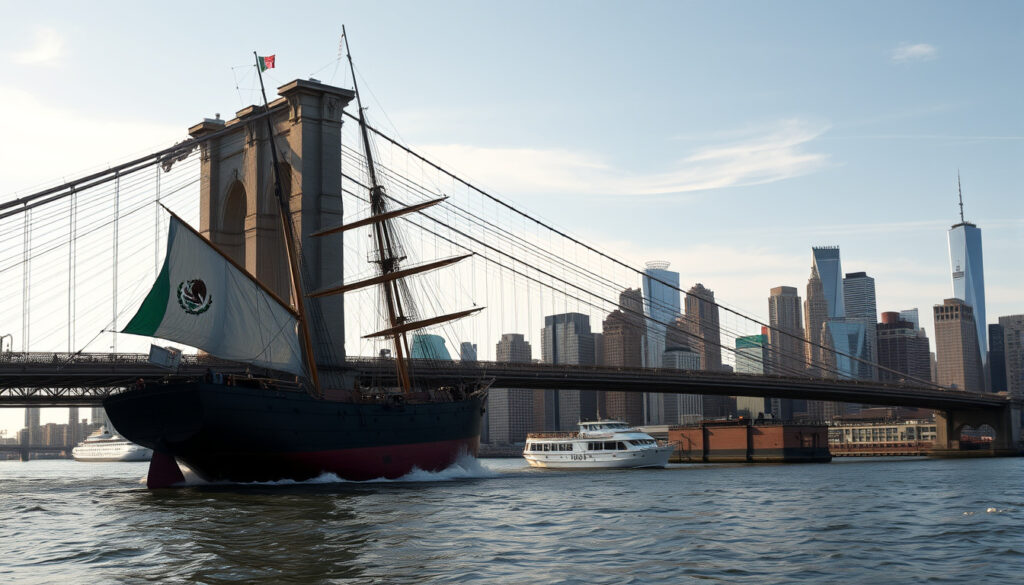
Mexican Ship Cuauhtémoc Brooklyn Bridge Crash: Key Facts
A routine departure from New York Harbor turned tragic when a Mexican Navy training ship lost power and drifted into the Brooklyn Bridge. The collision on May 17, 2025, killed two cadets and injured 19 others, pulling a centuries-old naval tradition into a modern-day safety debate.
Fatalities: 2 crew members ·
Injuries: 19 people ·
Ship: ARM Cuauhtémoc (Mexican Navy tall ship) ·
Date: May 17, 2025 ·
Cause: Loss of propulsion power ·
Location: Brooklyn Bridge, New York City
Quick snapshot
- The Cuauhtémoc struck the Brooklyn Bridge on May 17, 2025 (ABC News).
- Two cadets died; 19 people were injured (6abc).
- The ship lost propulsion power minutes after departing (ABC News).
- No one on the bridge was injured (6abc).
- All three masts were damaged in the collision (Marine Link).
- Exact cause of the power loss (mechanical failure vs. procedural error) is still under investigation.
- Whether the crew attempted emergency anchoring before impact.
- Final NTSB report findings are pending.
- May 17, ~09:55 — Ship departs Pier 17 in Brooklyn.
- ~10:00 — Propulsion lost; ship drifts toward bridge.
- ~10:02 — Masts strike bridge underside.
- May 18 — NTSB launches formal investigation.
- NTSB continues interviewing pilots, tug crew, and vessel crew.
- Ship towed to a local shipyard for repairs and examination.
- Mexican Navy cooperating with U.S. investigators.
Eight key facts about the Cuauhtémoc collision, drawn from preliminary reports:
| Attribute | Value |
|---|---|
| Ship name | ARM Cuauhtémoc (BE-01) |
| Ship type | Steel-hulled barquentine training ship |
| Incident date | May 17, 2025 |
| Time | Approximately 10:00 a.m. EDT |
| Location | East River, New York City, under Brooklyn Bridge |
| Fatalities | 2 cadets |
| Injuries | 19 (some critical) |
| Cause (preliminary) | Loss of propulsion power |
Why did a Mexican ship hit the Brooklyn Bridge?
What was the sequence of events before the collision?
The ARM Cuauhtémoc, a 158-foot air-draft tall ship crewed by about 277 cadets and officers, departed Pier 17 in Brooklyn around 9:55 a.m. EDT on May 17, 2025. Its intended route was to head down the East River and out to sea on a training cruise. The ship was maneuvering astern and was assisted by the tug Charles D. McAllister, according to a preliminary report from the NTSB (U.S. transportation safety authority).
A ceremonial departure with sailors on the yards turned into a deadly drift when the ship’s propulsion failed less than five minutes into the voyage. The margin between a routine departure and catastrophe was measured in seconds.
- Less than 5 minutes after getting underway, the ship lost propulsion power (ABC News (U.S. broadcast network)).
- The vessel was moving backward at more than 6 mph when it struck the bridge (ABC News).
- All three masts were damaged in the impact (Marine Link (maritime industry news)).
The implication: The narrow window between losing power and reaching the bridge left the crew with almost no time to react. The NTSB’s preliminary focus is on why the backup systems did not engage in time.
Did the Mexican ship lose power?
What caused the loss of power?
Yes — the Cuauhtémoc lost propulsion power within five minutes of leaving the pier, according to the NTSB’s preliminary findings. The ship was unable to regain power before drifting into the Brooklyn Bridge. The exact mechanical failure is still under investigation, but the NTSB has noted that pilot orders were translated from English to Spanish and relayed through multiple crew members — a communication chain that investigators are examining closely.
How long was the ship underway before losing power?
- The ship had been underway for less than 5 minutes when power was lost (ABC News).
- Drug and alcohol testing of the pilots and tug crew returned negative results, according to the NTSB report summarized by Marine Link.
What this means: The investigation is focusing on mechanical systems and communication protocols rather than impairment. The NTSB has interviewed the pilots, tug crew, and vessel crew as part of the ongoing inquiry (Marine Link).
Why were people on the masts of the Mexican ship?
What is ‘manning the yards’?
Sailors were performing a ceremonial tradition called “manning the yards” — standing on the horizontal yards of the masts as the ship departed. The practice is a display of seamanship and respect, often used during port departures and special occasions. When the masts struck the bridge’s underside, these sailors were thrown or crushed.
Why is this practice still used?
The tradition dates back centuries and is considered a high honor for cadets. It signals the crew’s readiness and discipline. But the Cuauhtémoc collision has renewed scrutiny of whether the practice is compatible with modern harbor safety, especially for tall ships with mast heights that barely clear bridge clearances.
Two cadets — América Yamilet Sánchez, 20, and Adal Jair Maldonado Marcos, 23 — were killed when the masts hit the bridge. Their presence on the yards was part of a tradition meant to honor their service. The collision makes plain that ceremonial practices carry real physical risk when the ship’s systems fail.
What were the casualties and injuries?
How many died and who were they?
Two Mexican Navy cadets were killed in the collision. Mexican authorities identified them as América Yamilet Sánchez, 20, and Adal Jair Maldonado Marcos, 23 (6abc (local ABC affiliate)). Both were cadets aboard the Cuauhtémoc’s training voyage.
How many were injured and what was the severity?
- 19 people were injured, some critically (ABC News).
- Injuries included fractures, bruises, and head trauma from falling or being thrown when the masts struck the bridge.
- No one on the Brooklyn Bridge was injured (6abc).
- A preliminary assessment reported no significant structural damage to the bridge’s load-bearing elements (YouTube).
The trade-off: The bridge survived with superficial damage, but the human toll — two young cadets dead and a dozen more injured — is the lasting cost of a mechanical failure that investigators say should not have been catastrophic.
What investigations followed the collision?
Who is leading the investigation?
The National Transportation Safety Board (NTSB) — the U.S. independent accident investigation agency — is leading the investigation. The U.S. Coast Guard and Mexican authorities are also involved. The NTSB held a Monday afternoon news conference after the collision to release preliminary details (6abc).
What are the initial findings?
- Initial focus is on the loss of propulsion and whether crew errors contributed (Marine Link).
- The NTSB has interviewed pilots, tug crew, and vessel crew as part of its ongoing work.
- The estimated damage to the ship is expected to exceed $500,000 (Marine Link).
- The ship was towed to a local shipyard for repairs and further examination.
The pattern: This is the first major bridge-ship collision in New York City in modern history, and the NTSB’s findings could influence how tall ships navigate constrained urban waterways worldwide.
Timeline of events
- May 17, 2025, ~09:55 — Cuauhtémoc departs pier in Brooklyn for a training cruise.
- ~10:00 — Ship loses propulsion power; begins drifting toward Brooklyn Bridge.
- ~10:02 — Masts strike underside of Brooklyn Bridge; cadets on yards are thrown or crushed.
- Immediately after — Emergency services respond; injured evacuated.
- May 18, 2025 — NTSB launches formal investigation; Mexican Navy announces condolences.
- May 19, 2025 — Names of deceased cadets reported.
- June 30, 2025 — Detailed reconstruction of events published (6abc).
The NTSB’s final report will determine whether the power loss stemmed from mechanical failure, procedural missteps, or a combination. For the Mexican Navy, the outcome could reshape how the Cuauhtémoc — and similar training vessels — conduct port departures with cadets on the yards.
Confirmed facts vs. what remains unclear
Confirmed facts
- The Cuauhtémoc struck the Brooklyn Bridge on May 17, 2025.
- Two cadets died; 19 were injured.
- The ship lost power before the collision.
- Sailors were manning the yards at the time.
- No one on the bridge was injured.
- All three masts were damaged.
What remains unclear
- Exact cause of the power loss (mechanical failure vs. procedural error).
- Whether the crew attempted emergency measures (e.g., dropping anchor).
- Final NTSB report findings (pending).
- Whether communication delays due to language translation contributed to the outcome.
Voices from the incident
“The vessel lost propulsion power and drifted into the bridge.”
— NTSB official, preliminary statement
“We express our deepest grief and our full cooperation with the investigation.”
— Mexican Navy spokesperson
“There was chaos onboard. People were screaming. The masts hit with a terrible sound, and cadets were thrown from the yards.”
— Witness aboard the ship (survivor account)
The collision is a stark reminder that even the most time-honored traditions must account for modern mechanical realities. For the families of América Yamilet Sánchez and Adal Jair Maldonado Marcos, the loss is permanent. For the NTSB and the Mexican Navy, the question is whether this tragedy can be prevented elsewhere.
Related reading: Delta Flight Stranded on Island: What We Know About Flight 127 · Royal Caribbean Icon of the Seas: Itineraries, Price & Decks
youtube.com, youtube.com, bairdmaritime.com, youtube.com, en.wikipedia.org
The tragic incident, which killed two cadets and injured 19, is the subject of an ongoing NTSB investigation into the collision.
Frequently asked questions
How fast was the Cuauhtémoc moving when it hit the bridge?
The vessel was moving backward at more than 6 mph when it struck the Brooklyn Bridge, according to a preliminary NTSB report (ABC News).
Was the Brooklyn Bridge damaged?
A preliminary assessment reported no significant structural damage to the bridge’s load-bearing elements. The bridge remained safe and operational after the collision.
Who were the two cadets who died?
Mexican authorities identified them as América Yamilet Sánchez, 20, and Adal Jair Maldonado Marcos, 23 (6abc).
What is the history of the Cuauhtémoc ship?
The ARM Cuauhtémoc (BE-01) is a steel-hulled barquentine training ship operated by the Mexican Navy. It was on a 254-day training voyage visiting 15 countries when the collision occurred (Marine Link).
Has a ship ever hit the Brooklyn Bridge before?
This is the first major bridge-ship collision in New York City in modern history. While smaller vessels have bumped the bridge, no prior tall-ship collision with casualties is recorded.
What does ‘manning the yards’ mean?
It is a ceremonial tradition where sailors stand on the horizontal yards (spars) of the ship’s masts as a display of seamanship and respect, often performed during port departures and special occasions.
What happens next in the investigation?
The NTSB continues to interview crew members, analyze mechanical systems, and examine communication protocols. A final report with findings and recommendations is expected in the coming months. The ship has been towed to a local shipyard for repairs and further examination.
For the Mexican Navy and U.S. maritime authorities, the choice is clear: either strengthen safety protocols for tall ships in constrained harbors, or risk another tragedy when tradition and mechanical failure collide.
More related posts
 West Side Story 2021: Controversy, Box Office Flop & LGBTQ Themes
 Liverpool vs Crystal Palace: TV, penalty miss, result & smash
 Shoe Carnival Near Me: Store Locator, Hours & Online Ordering
 Target Christmas Eve Hours 2025: What Time Does Target Close?
 Air Conditioning Replacement Near Me: 2025 Cost Guide
 AOL Mail Login: How to Sign In Automatically, on Mobile & More
 The Parent Trap Cast: Twins, Double, Deaths & Now
 Call Verizon Customer Service – Official Numbers, Hours & Tips
